Millions of people living with post-traumatic stress disorder may soon have a powerful new tool for recovery following FDA clearance of a personalized brain stimulation technology. Developed by Wave Neuroscience in partnership with the Texas A&M Health Institute of Biosciences and Technology, the system utilizes Magnetic e-Resonance Therapy to target the specific needs of each patient. Early clinical trial data suggests a massive leap forward in efficacy, with participants seeing a 52 percent reduction in symptoms and an impressive 68 percent achieving full remission.
For decades, the gold standard for PTSD treatment has relied heavily on psychotherapy and SSRI medications. While these methods provide relief for some, many patients find them insufficient, with previous reviews showing remarkably low remission rates compared to this new approach. Dr. Erik Won, chief medical officer at Wave Neuroscience, describes these latest results as a quantum change and an inflection point in clinical care, noting that the level of improvement seen in their trials far exceeds traditional pharmacological outcomes.
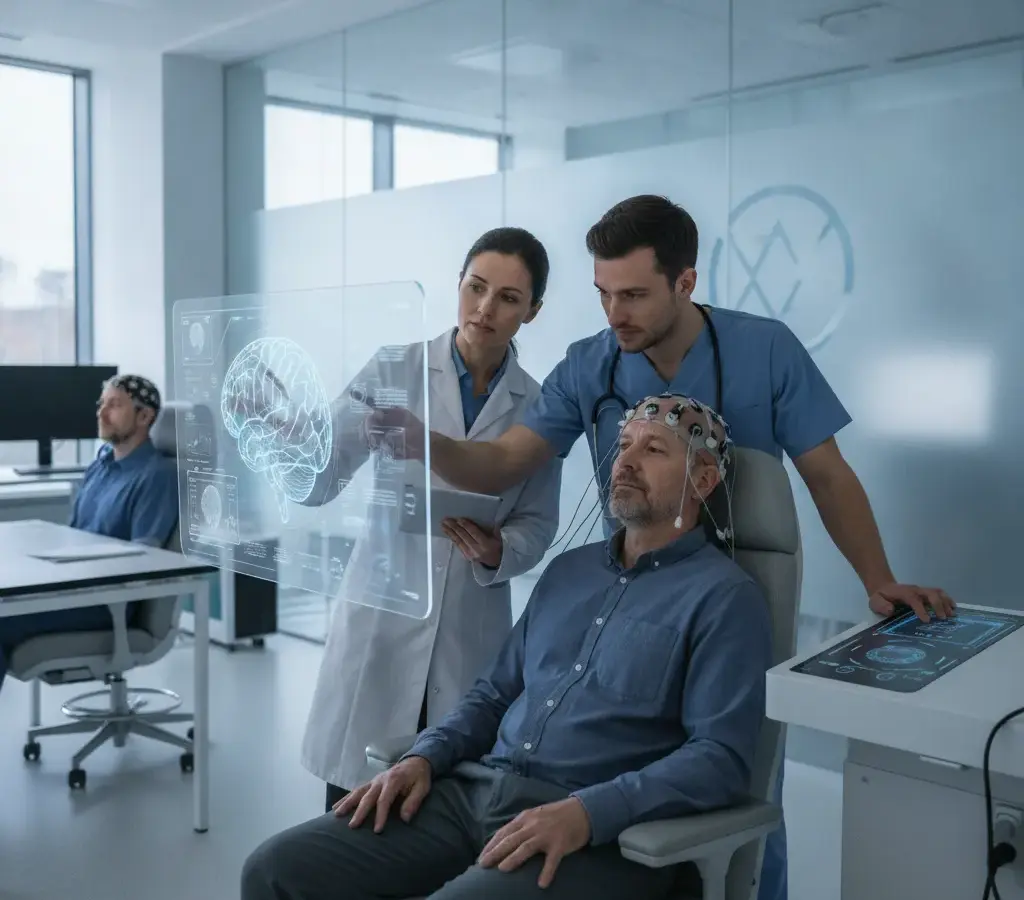
The secret to the success lies in personalization powered by artificial intelligence. Unlike standard transcranial magnetic stimulation, which often applies a one size fits all protocol, this new method begins with an EEG to map a patient’s unique electrical brain activity. An AI driven algorithm then analyzes this data to create a customized stimulation plan delivered via magnetic pulses to the scalp. Dr. Kenneth S. Ramos explains that since every human brain is biologically distinct, moving away from standardized protocols allows doctors to address the root cause of distress rather than just managing the surface symptoms.
This breakthrough comes at a critical time given the staggering toll of PTSD on veterans and civilians alike across the United States. By combining precision medicine with advanced neurology, researchers hope to reach those who have felt abandoned by traditional medicine. Having recently earned an FDA Breakthrough Device designation to accelerate its availability, this technology represents a shift toward biological guidance in mental health care, aiming to restore quality of life for an estimated 13 million people currently struggling with the disorder.